Brachyscome multifida – Cut-Leaf Daisy
$ 7.50
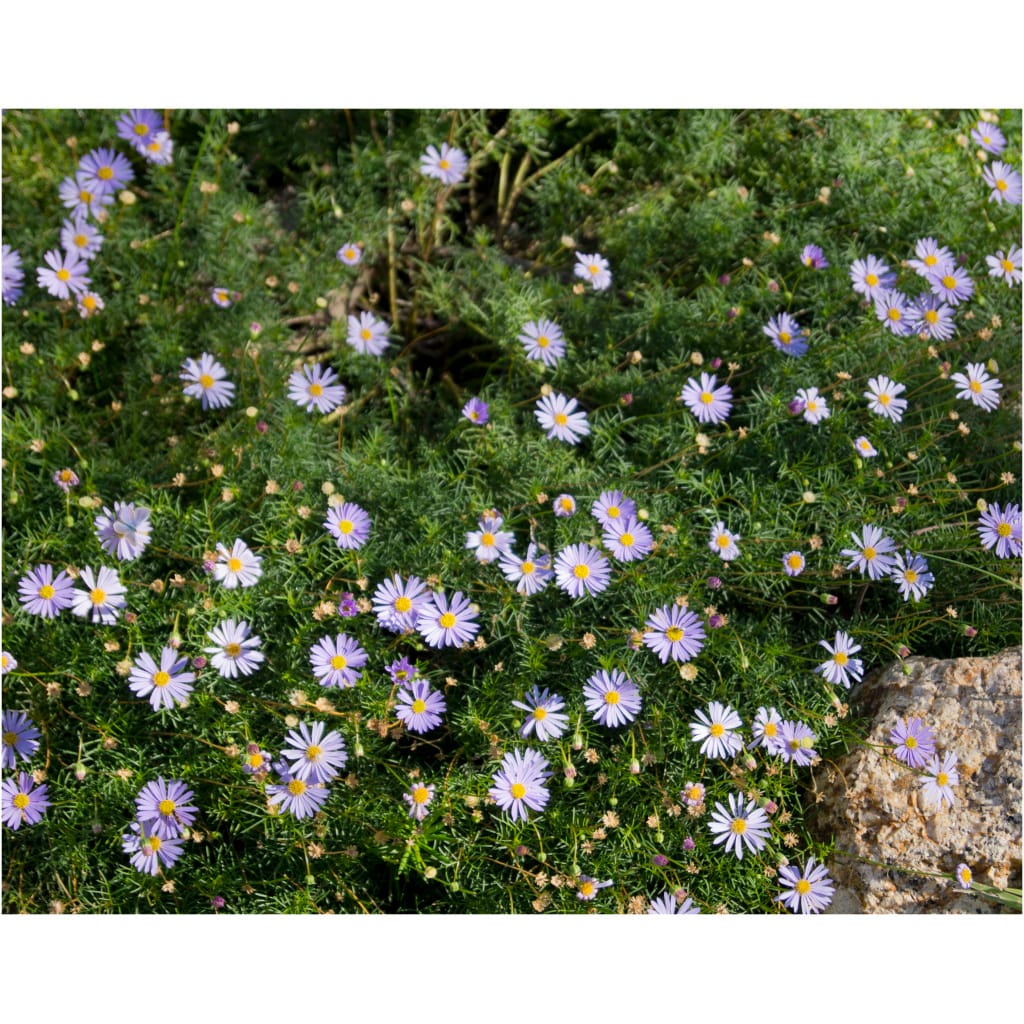
Brachyscome multifida – Cut-Leaf Daisy A beautiful, easy-care Australian native perennial groundcover with finely divided foliage and masses of daisy flowers. Naturally found through temperate parts of southern Queensland, New South Wales and Victoria, it commonly grows in the grassy understorey of open forests and woodlands, often in shallow, rocky soils. This compact, mounding species usually grows around 15–40 cm high and can spread from 50 cm to over 1 m wide, depending on conditions. Its soft green leaves are divided and lobed, creating a fine-textured ground layer, while the cheerful daisy flowers are typically pink-mauve, though forms in mauve, lilac, violet-blue, white and lemon also occur. Flowering can occur for much of the year in suitable conditions, with strong flushes mainly from September to February. With its long flowering season, tidy habit and tolerance of a wide range of soils, Brachyscome multifida is excellent for rockeries, borders, mass plantings, containers, hanging baskets, embankments and underplanting beneath trees. Flowers • Single daisy flowerheads held above the foliage, often pink-mauve in local forms.• Flowering peaks from September to February, with flowers possible throughout much of the year.• Forms may occur in mauve, lilac, pink, violet-blue, white or lemon.• Flowers attract bees, butterflies and other beneficial insects. Foliage • Soft green, divided and lobed leaves, usually 1.5–4 cm long.• Fine-textured foliage forms a compact, mounding groundcover.• Depending on form, plants may create dense mats or neat clumps.• Excellent for softening edges, spilling over walls, and filling gaps between larger shrubs. Cultivation Soil: Adaptable to a wide range of soils including sandy soils, loams, sandy loams, clay loams and potting mixes. It grows in moist, well-drained clays and shallow rocky soils, and is generally reliable if drainage is adequate. Sunlight: Best flowering occurs in full sun, but it also grows well in light shade, dappled shade or semi-shade. Watering: Requires little additional watering once established, but benefits from light watering during extended dry periods, especially in containers or very exposed positions. Frost tolerance: Tolerates light frost. Foliage may burn in frost, but plants generally regenerate quickly, particularly if old growth is left unpruned through the coldest months. Drought tolerance: Moderately drought tolerant once established, though flowering and foliage quality are improved with occasional watering in dry weather. Pruning: Remove spent flowers to encourage further blooms. Give plants a light trim if they become untidy, and prune after major flowering flushes to maintain compact growth. Fertiliser: Apply a light dressing of slow-release native fertiliser in spring and early autumn to support long flowering. Uses • Excellent native groundcover for borders and mass plantings.• Suitable for pots, hanging baskets and containers.• Ideal for rockeries, embankments and retaining walls.• Useful for underplanting trees and shrubs.• Good for wildflower meadows, cottage gardens and low-maintenance native gardens.• Helps with soil binding on slopes and garden edges. Habitat Value Brachyscome multifida is a valuable lower-storey plant for pollinator-friendly gardens. Its long flowering season provides nectar and pollen for bees, butterflies and other insects, while the dense foliage gives small-scale shelter to invertebrates. As a low, spreading native groundcover, it helps create layered habitat beneath taller shrubs and trees. In mass plantings, rockeries or mixed native borders, it adds both ecological function and long-lasting flower colour. Growing Tips Plant in a sunny to lightly shaded position for best flowering. Ensure the soil is reasonably well drained, particularly in pots and baskets. Although adaptable and easy-care, plants will flower more strongly if watered during long dry spells and lightly fed in spring. Deadhead or trim after flowering flushes to keep the plant neat and encourage repeat blooms. In frosty areas, delay heavier pruning until after the coldest weather has passed so older foliage can help protect the crown.