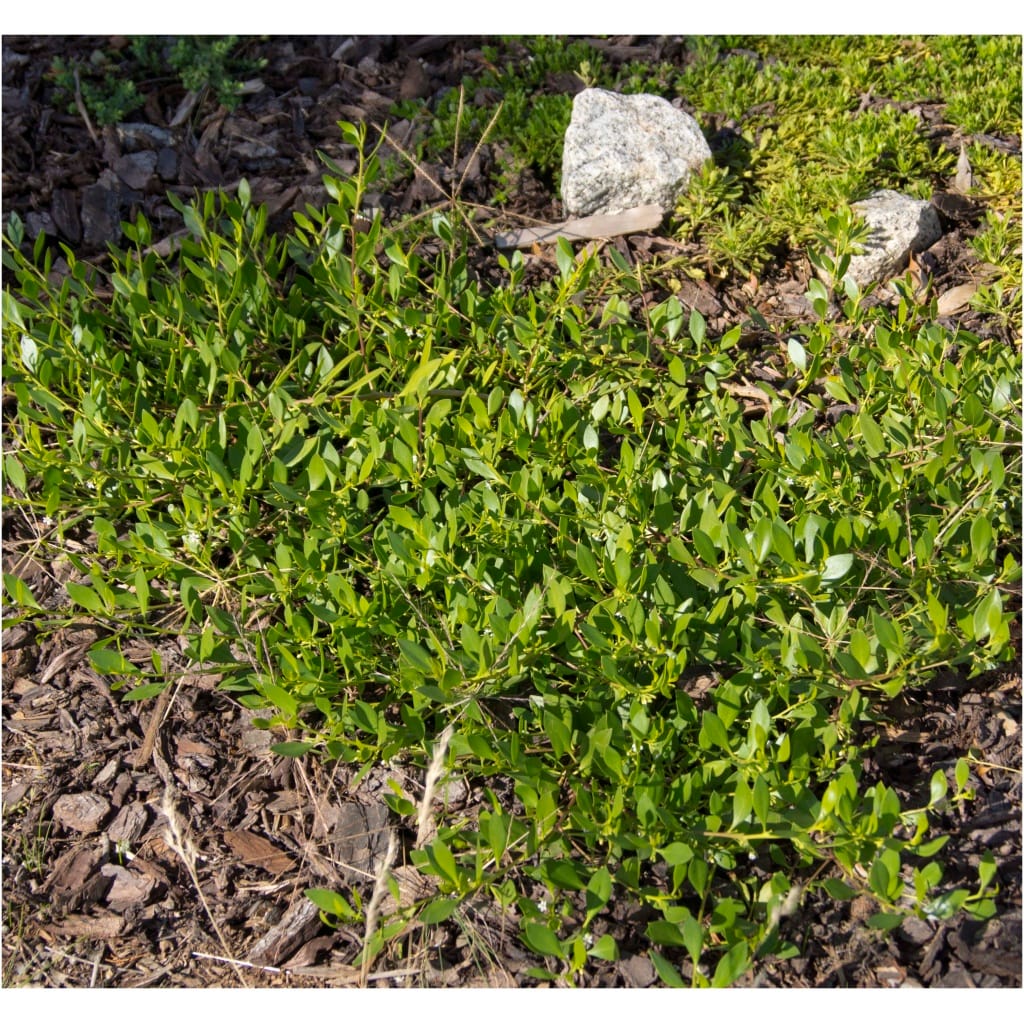
Coastal Boobialla – Myoporum insulare (prostrate)
$ 7.50
Coastal Boobialla – Myoporum insulare prostrate Myoporum insulare prostrate, commonly known as coastal boobialla, common boobialla or native juniper, is a tough Australian native groundcover to low spreading shrub with glossy green foliage, small white flowers and purple-black edible fruit. This prostrate form is especially useful where a hardy, fast-covering native plant is needed for banks, slopes, coastal gardens, verge plantings, exposed sites, retaining walls, dry gardens and habitat-focused landscapes. The species Myoporum insulare is naturally variable, occurring as everything from a prostrate shrub to a larger shrub or small tree. This low-growing prostrate form gives gardeners the toughness of coastal boobialla in a more spreading, ground-covering habit. It is well suited to harsh positions where wind, salt spray, reflected heat, drought and poor soils can be difficult for softer plants. Flowers Myoporum insulare produces small white flowers, often with subtle purple spotting inside the flower. Flowering is usually strongest from spring into summer, with timing influenced by local conditions, pruning and plant age. The flowers are attractive to native bees, hoverflies and other beneficial insects, making this plant useful in habitat gardens and biodiversity-focused native landscapes. Foliage and Growth Habit The foliage is glossy green, evergreen and dense, giving the plant a fresh, resilient appearance throughout the year. This prostrate form spreads outward to form a broad, low cover that can help stabilise soil, soften hard edges and protect exposed ground. Growth is generally vigorous once established. Plants can be trimmed to maintain a lower, denser habit, trained over banks and walls, or allowed to spread as a tough informal groundcover. In open ground it can become a broad, spreading shrub over time, so allow space or prune as needed. Fruit and Edible Uses After flowering, Myoporum insulare may produce smooth purple to black fruits. The fruit is edible when ripe and has been used for jams and jellies. As with all edible native plants, only eat material that has been correctly identified and grown without chemical treatment. Cultivation Soil: Highly adaptable, but best in well-drained soil. Suitable for sandy, gravelly, loamy and lightly clay-based soils where drainage is reasonable. It is particularly useful in coastal soils, sandy gardens, exposed banks and low-water native landscapes. Sunlight: Grows in full sun to part shade. Full sun generally encourages denser growth, stronger flowering and better fruiting, while part shade is tolerated in open garden settings. Watering: Water regularly while establishing. Once established, Myoporum insulare is drought tolerant and usually needs little supplementary water except during extended dry periods or when grown in pots. Frost tolerance: Tolerates moderate frost once established, particularly in well-drained positions. Young plants may benefit from protection during severe frost while settling in. Drought, wind and salt tolerance: Drought tolerant, wind tolerant and highly salt tolerant once established. An excellent choice for coastal gardens, exposed inland gardens, windbreak edges, erosion-prone banks and tough low-maintenance plantings. Pruning and maintenance: Prune as needed to control spread, maintain density or keep growth away from paths, driveways and neighbouring plants. Tip pruning while young can encourage a denser habit. Avoid overwatering in heavy soil. Uses Hardy native groundcover to low spreading shrub. Coastal gardens, salt-tolerant plantings and exposed sites. Dry banks, slopes, retaining walls and erosion control. Verge gardens and low-water native landscapes. Habitat gardens for native bees and beneficial insects. Food and medicine plant collections where edible native fruits are valued. Informal screening, low shelter planting and wind-exposed edges. Large pots and tough container plantings. Habitat Value Myoporum insulare is valuable in habitat-focused gardens because it provides dense evergreen cover, flowers for beneficial insects and fruit that can be used by wildlife. Its low, spreading habit helps create sheltered ground-level habitat and can reduce bare soil in exposed areas. It combines well with hardy Australian native plants such as Eremophila, Chrysocephalum, native grasses, coastal daisies and other tough groundcovers. Growing Tips Plant in full sun to part shade with good drainage. Water through establishment, then reduce watering once the plant is growing strongly. For faster coverage, tip prune young plants to encourage branching and a denser habit. Allow room for the plant to spread, especially in open garden beds. In smaller gardens or near paths, prune regularly to maintain the desired shape. For containers, use a free-draining native potting mix and choose a large pot with excellent drainage. Shipping Note At Sylvaterre Native Nursery, every plant is treated with care and respect. Unlike many online nurseries that ship tubestock lying flat — often stacked on top of each other in standard Australia Post boxes — all Sylvaterre plants are shipped upright in custom-made cardboard plant boxes. This helps ensure they arrive healthy, happy, and ready to thrive in your garden or pots. See our shipping cartons in the image gallery.