Alyogyne huegelii Pink Form
$ 6.85
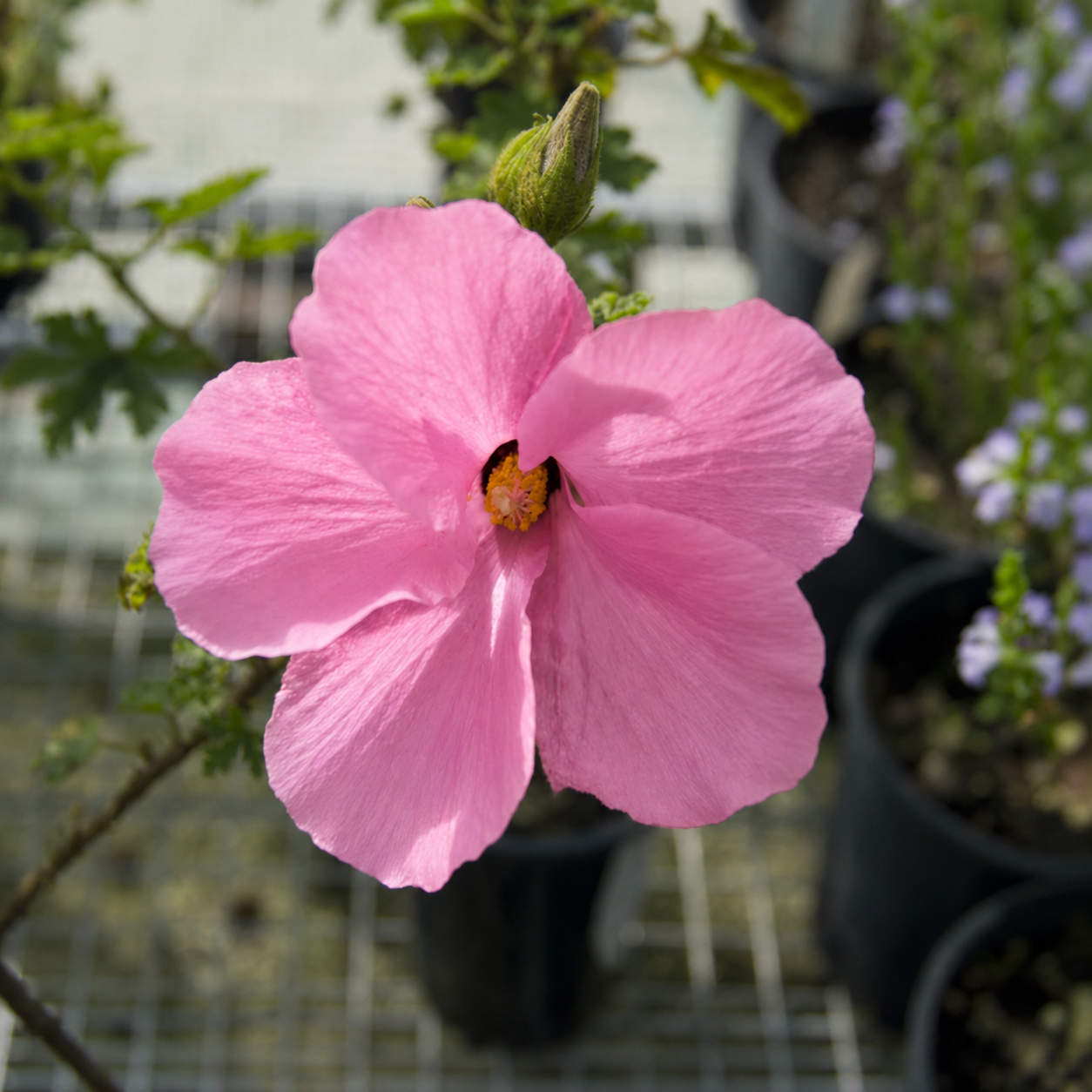
Alyogyne huegelii Pink Form Native Hibiscus Alyogyne huegelii Pink Form is an uncommon pink-flowering form of the Australian native hibiscus, grown for its masses of soft pink, hibiscus-like flowers, fresh green foliage, fast growth, and strong dry-climate performance. While purple and lilac forms of Alyogyne huegelii are far better known, this naturally occurring pink form is much less often seen in the eastern states nursery trade, especially as established potted plants. This is a rare opportunity for gardeners who love native hibiscus but want something softer, more unusual, and quietly spectacular. The flowers have the same silky, open beauty that makes Alyogyne so loved, but the pink colouring gives the plant a gentler, warmer presence in the garden. Maturing to around 1.5–2m high and 1.5–2m wide, Alyogyne huegelii Pink Form is large enough to make a confident garden statement without becoming unmanageable. It is best used as a feature shrub, informal flowering screen, habitat plant, or large pot specimen in sunny, well-drained positions. Why Grow Alyogyne huegelii Pink Form? Alyogyne huegelii Pink Form is for gardeners who want something genuinely special. It has the toughness and flower power of the better-known native hibiscus forms, but with a softer colour that is rarely available in established potted stock. It is especially useful for: Sunny native garden beds Feature planting near paths, entrances, and outdoor living areas Informal flowering screens and soft hedges Wildlife-friendly gardens Dry-climate gardens needing long-season colour Large pots, tubs, courtyards, and paved outdoor spaces Collectors of uncommon Australian native plants This is not a background filler plant. When in flower, it becomes a feature in its own right. Alyogyne huegelii Pink Form Flowers The flowers are the reason to grow this plant. Alyogyne huegelii Pink Form produces masses of large, open, hibiscus-like blooms in soft pink tones. The petals have a delicate, silky appearance, while the fresh green foliage gives the shrub a light, elegant look. Flowering is strongest from late winter to early summer in the eastern states, with the potential for further scattered flowering when conditions are favourable. Individual flowers may be short-lived, but the shrub produces so many buds that the display can feel continuous through its main flowering season. For the best flowering display, plant in full sun, provide excellent drainage, and prune after flowering to encourage fresh growth. Wildlife Value of Alyogyne huegelii Pink Form The open flowers of Alyogyne huegelii Pink Form are highly attractive to pollinating insects. In habitat-focused gardens, they can draw Blue Banded Bees, butterflies, hoverflies, and other pollen-loving insects into the garden. The long flowering season is especially valuable because it provides colour and insect activity when many other shrubs are still building toward their main spring display. Small insect-feeding birds may also visit the plant while foraging among the foliage and flowers. Best Position for Alyogyne huegelii Pink Form Plant Alyogyne huegelii Pink Form in full sun to part shade. Full sun will produce the strongest flowering, densest growth, and best overall form. Choose a position with: Full sun for maximum flowering Good airflow Well-drained soil Space for the shrub to reach around 1.5–2m wide Protection from waterlogging Both the species and its close garden forms are well suited to hot, dry conditions, making this an excellent choice for warm, open Australian gardens where many softer flowering shrubs struggle. Soil and Water Requirements Alyogyne huegelii Pink Form grows best in well-drained soil. It will tolerate sandy, loamy, or lightly improved soils, provided water does not sit around the root zone. Water regularly while establishing. Once established, it becomes drought tolerant and rarely needs supplemental watering except during extended hot, dry periods or when grown in pots. For best results: Improve heavy soils with raised planting or better drainage Mulch around the root zone, keeping mulch clear of the stem Water deeply rather than frequently Avoid permanently wet or boggy soil Use native plant fertiliser sparingly if required Prune after flowering to maintain shape and vigour This is a low-maintenance native shrub once settled into the garden. Frost and Heat Tolerance Alyogyne huegelii Pink Form is well suited to many Australian garden conditions. It has excellent heat tolerance and, once established, handles dry periods very well. It will tolerate light to moderate frost, particularly when planted in a sunny, protected position. In colder gardens, choose a warm position with winter sun and some shelter from cold winds. Drought tolerance: Excellent once established Frost tolerance: Light to moderate frost tolerant in a protected position Heat tolerance: Excellent Drainage needs: Must have well-drained soil Pruning Alyogyne huegelii Pink Form Pruning is important for keeping Alyogyne huegelii Pink Form dense, rounded, and flowering well. Tip-prune young plants to encourage branching, then prune after the main flowering period. For established plants, a firm prune after flowering will help: Maintain a fuller shape Encourage fresh flowering growth Reduce legginess Improve performance in pots Keep informal hedges and screens neat Avoid cutting hard into old bare wood unless the plant is healthy and actively growing. Growing Alyogyne huegelii Pink Form in Pots Alyogyne huegelii Pink Form is suitable for large pots, tubs, courtyard planters, and sunny paved areas, provided it receives enough light and excellent drainage. Use a generous container with a quality native plant potting mix. Water deeply when the mix begins to dry, and prune after flowering to keep the plant compact, balanced, and full. In pots, it will usually remain smaller than garden-grown plants, making it easier to manage around courtyards, entrances, balconies, and outdoor living areas. It will need regular maintenance to keep it looking its best in a container. Garden Design Ideas for Alyogyne huegelii Pink Form The soft pink flowers of Alyogyne huegelii Pink Form combine beautifully with silver, grey, lime-green, and fine-textured native foliage. It can be used as a central feature, a loose flowering backdrop, or a pollinator-friendly shrub in mixed native plantings. Suitable planting companions include: Chocolate Lilies Mint Bush species Lechenaultia Beaufortia Dwarf forms of Melaleuca Native daisies and everlastings Eremophila species and cultivars Low-growing saltbush and bluebush Other dry-climate flowering shrubs This plant suits pollinator gardens, dry-climate borders, habitat plantings, and sunny mixed native gardens where long-season flowers and wildlife value matter. Alyogyne huegelii Pink Form At a Glance Botanical name: Alyogyne huegelii Pink Form Common name: Pink Native Hibiscus Plant type: Fast-growing Australian native flowering shrub Mature height: Around 1.5–2m Mature width: Around 1.5–2m Position: Full sun to part shade Soil: Well-drained soil Flowers: Large soft pink hibiscus-like flowers Flowering season: Late winter to early summer in the eastern states Wildlife value: Attracts Blue Banded Bees, butterflies, hoverflies, and pollen-loving insects Drought tolerance: Excellent once established Frost tolerance: Light to moderate frost tolerant in a protected position Pot suitability: Excellent for large pots, tubs, courtyards, and patios, with regular maintenance Best uses: Feature shrub, informal screen, flowering hedge, habitat garden, large container plant Availability: Very limited potted stock Shipping Note Sylvaterre ships plants upright in custom-made cardboard boxes so they arrive healthy and ready to thrive, unlike nurseries that ship tubestock lying flat in standard Australia Post boxes.