Chrysocephalum baxteri – Fringed Everlasting / White Everlasting
$ 3.09
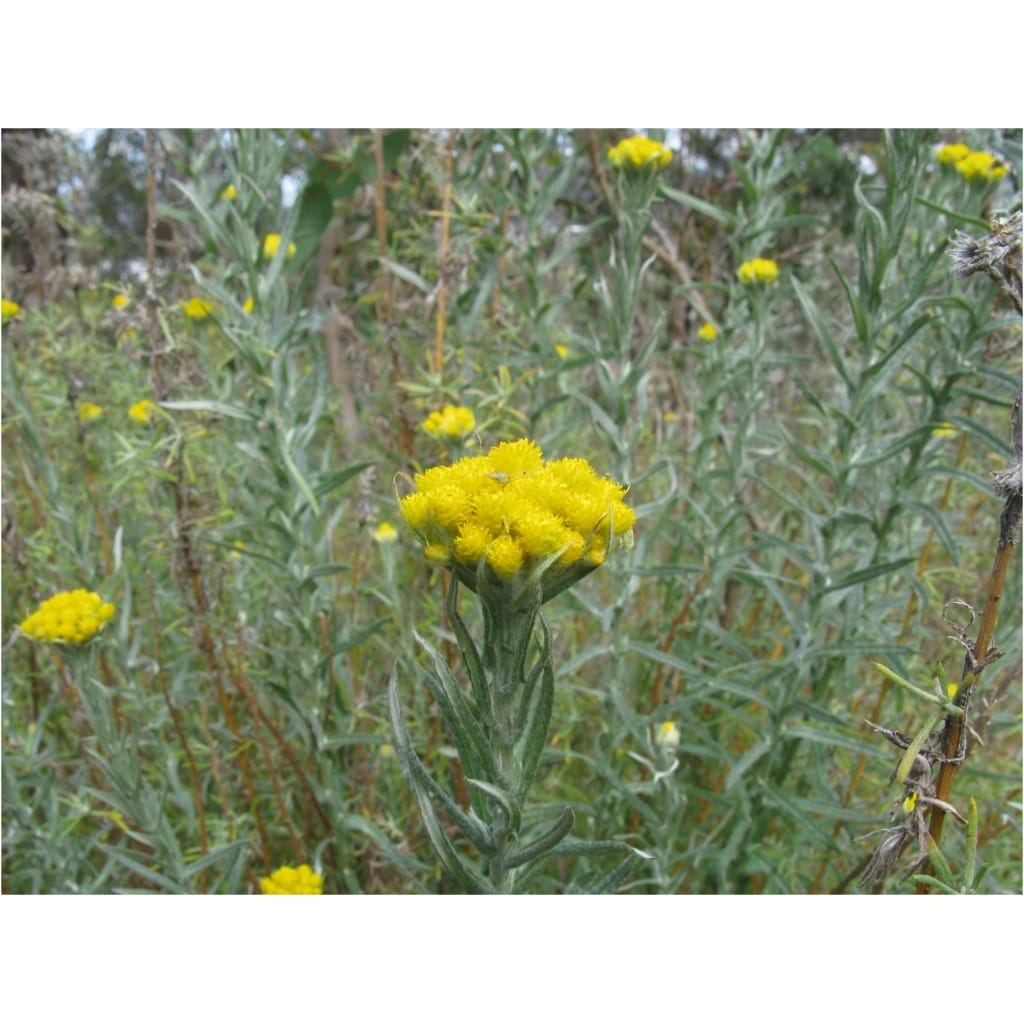
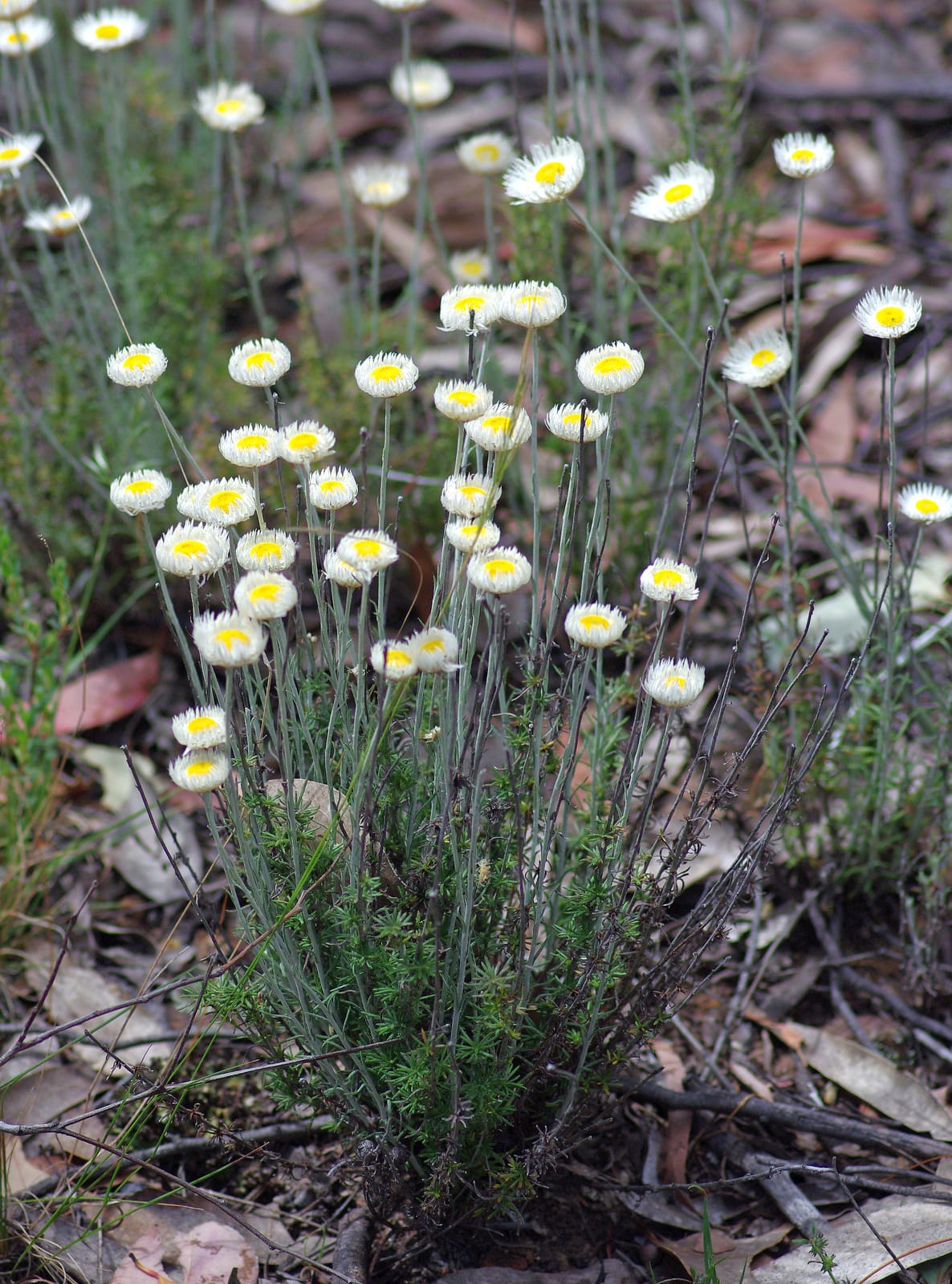
Chrysocephalum baxteri, commonly known as Fringed Everlasting or White Everlasting, is a beautiful low-growing Australian native daisy with soft silvery-grey foliage and papery white flower heads with golden-yellow centres. It forms a compact clump or low mound, making it ideal for rockeries, borders, raised beds, pots, native cottage gardens and pollinator-friendly plantings. Growing to around 20–40 cm high and 30–50 cm wide, this hardy perennial provides a refined contrast among native grasses, small shrubs and colourful native daisies. The narrow, woolly foliage gives the plant a soft grey appearance, while the long-lasting white flowers add clean, bright seasonal colour. The flower heads are usually held singly at the ends of the stems and are typically 20–40 mm across, with papery white bracts surrounding a golden-yellow centre. Flowering is strongest through spring and summer, often continuing into early autumn in favourable conditions. This is an excellent choice for gardeners wanting a low, silver-leaved native daisy that performs well in sunny, well-drained positions and supports small pollinators. Flowers • Papery white everlasting flower heads with golden-yellow centres.• Flower heads are usually solitary and held at the ends of stems.• Individual flower heads are generally 20–40 mm across.• Main flowering period is spring to summer, often extending into early autumn.• Long-lasting flowers add value in both garden beds and cut-flower arrangements.• Attractive to native bees, hoverflies, beetles, butterflies and other small pollinating insects. Foliage • Soft silvery-grey to grey-green foliage.• Leaves are narrow and linear, generally 5–30 mm long and 0.5–2.5 mm wide, though larger leaves can occur in some forms.• Stems and leaves are often woolly or felted, giving the plant a soft, silvered appearance.• Provides excellent contrast beside native grasses, Brachyscome, Chrysocephalum, Xerochrysum and other small flowering natives. Cultivation Soil: Best in well-drained soil, including sandy, gravelly or loamy soils. Avoid heavy, wet or poorly drained positions. Sunlight: Grow in full sun to light shade. Full sun gives the strongest flowering and most compact growth. Watering: Water regularly during establishment. Once established, Chrysocephalum baxteri is drought tolerant and needs only occasional watering during long dry periods. Frost tolerance: Frost tolerant once established, especially in an open, well-drained position. Drought tolerance: Drought tolerant once established, although plants in pots will perform best with occasional deep watering during extended dry weather. Pruning: Cut back after the main flowering flush to encourage fresh, compact growth. Older plants can become open if left unpruned, but respond well to trimming. Fertiliser: Use a low-phosphorus native fertiliser sparingly in spring if required. Avoid heavy feeding. Uses • Low native daisy for rockeries, borders and native cottage gardens.• Excellent for pots, bowls and containers.• Useful in raised beds and well-drained dry gardens.• Attractive silver-grey foliage contrast plant.• Long-lasting white flowers suitable for fresh or dried floral interest.• Good for pollinator-friendly gardens.• Ideal among native grasses, Brachyscome, Xerochrysum, Chrysocephalum and small dryland shrubs. Habitat Value Chrysocephalum baxteri is a valuable small native daisy for habitat gardens. Its open yellow-centred flower heads provide accessible pollen and nectar for native bees, hoverflies, beetles, butterflies and other beneficial insects. Its low clumping habit helps build the ground-layer of a wildlife garden, especially when planted with native grasses, lilies, small shrubs and other perennial daisies. This kind of layered planting provides food, shelter and movement corridors for small garden fauna. Growing Tips Plant in a sunny, well-drained position. Water through the first summer to establish a strong root system, then reduce watering once the plant is growing well. For the best appearance, cut back after flowering. This keeps the plant compact, encourages fresh silver foliage and helps promote repeat flowering. In pots, use a free-draining native potting mix and avoid saucers that hold water. Shipping Note At Sylvaterre Native Nursery, every plant is treated with care and respect. Unlike many online nurseries that ship tubestock lying flat — often stacked on top of each other in standard Australia Post boxes — all Sylvaterre plants are shipped upright in custom-made cardboard plant boxes. This helps ensure they arrive healthy, happy, and ready to thrive in your garden or pots. See our shipping cartons in the image gallery. Natural Range Chrysocephalum baxteri is native to southern Australia, occurring in South Australia, Victoria, southern New South Wales and the Bass Strait islands. It grows naturally in habitats such as lowland heath, sclerophyll forest, sandy soils, coastal and near-coastal vegetation, dunes and rocky sites. In New South Wales, it is mainly associated with the far south coast around the Eden district. In Tasmania, it is restricted to the Furneaux Group / Bass Strait islands, rather than mainland Tasmania as a whole. Conservation / Rarity Status Tasmania: Listed as Rare under the Tasmanian Threatened Species Protection Act 1995, where it is restricted to the Furneaux Group / Bass Strait islands. Victoria: Native and present in Victoria, where it is not treated here as formally threatened. New South Wales: Native to the far south coast, particularly around the Eden district. No formal NSW threatened listing is included here. South Australia: Native to South Australia. No formal South Australian threatened listing is included here. Taxonomy Note Chrysocephalum baxteri was previously known as Helichrysum baxteri. Some older plant references and labels may still use that name.