Anigozanthos manglesii Red and Green Kangaroo Paw
$ 2.19
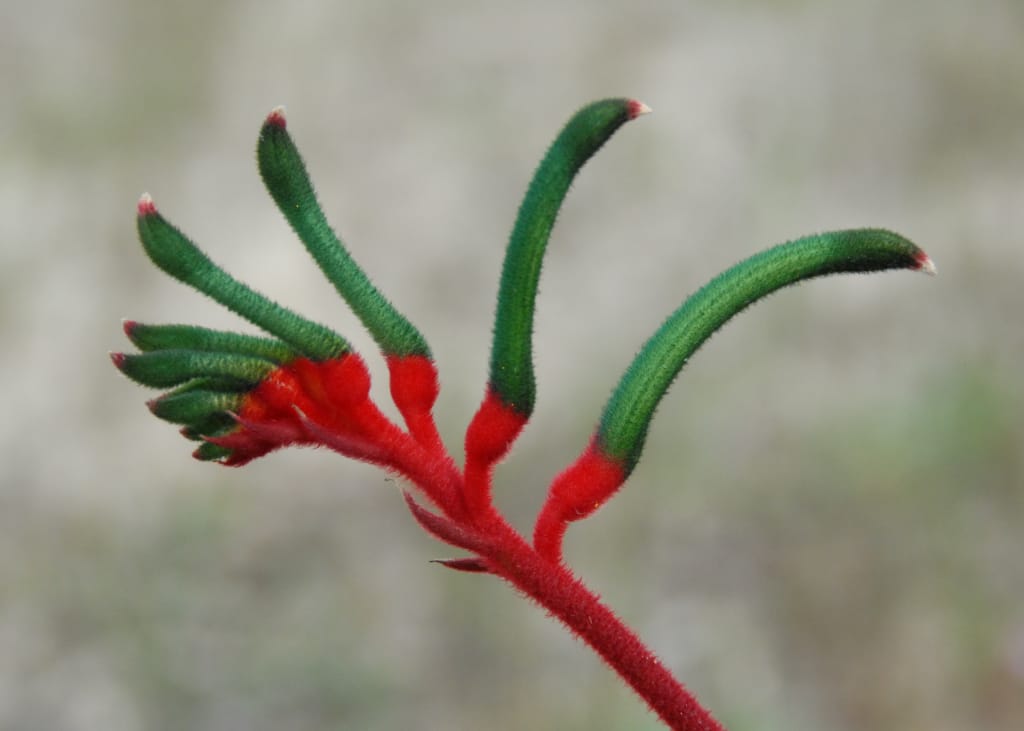
Anigozanthos manglesii, commonly known as Red and Green Kangaroo Paw or Mangles Kangaroo Paw, is one of Australia’s most iconic wildflowers and the floral emblem of Western Australia. With vivid red flower stems and velvety green paw-shaped blooms, this species has a sculptural beauty that feels unmistakably Australian. Unlike many modern hybrid kangaroo paws bred for toughness and mass landscaping, Anigozanthos manglesii is a true species plant with a more seasonal rhythm. It grows from a rhizomatous base, produces strappy grey-green foliage, sends up dramatic flower stems in late winter and spring, then may retreat or look tired as summer heat and dryness increase. In good conditions, flower stems can rise to around 0.3–1.1m high, creating a striking vertical display above the foliage. It is best grown in full sun, excellent drainage, and an open position where the foliage can dry quickly after rain. Why Grow Anigozanthos manglesii? Anigozanthos manglesii is an heirloom species plant for gardeners who love Australian wildflowers in their more authentic form. It is not the easiest kangaroo paw, but it is one of the most beautiful. It is especially useful for: Sunny native garden beds Feature planting in well-drained soil Large pots and tubs Wildflower-style plantings Cut flowers Bird-attracting gardens Collectors of Western Australian native plants Educational gardens featuring state floral emblems This is a plant to grow for its flower display, its story, and its extraordinary colour contrast. Red and Green Kangaroo Paw Flowers The flowers of Anigozanthos manglesii are what make it famous. The stems are usually rich red, while the paw-shaped flowers are covered in fine green hairs, giving them a soft, velvety texture. Flowering is mainly from late winter through spring, with Western Australian records commonly placing flowering from August to November. In eastern Australian gardens, timing may vary with climate, planting time, and seasonal conditions. The flowers are excellent for cutting. Pick stems when several flowers have opened and place them straight into clean water. Wildlife Value Red and Green Kangaroo Paw is valuable for nectar-feeding birds. Honeyeaters and wattlebirds are strongly attracted to kangaroo paw flowers, feeding from the tubular blooms while helping move pollen between plants. The flowers may also attract native bees and other insects, but its strongest wildlife value is as a bird-attracting plant in sunny native gardens. Best Position for Anigozanthos manglesii Plant Anigozanthos manglesii in full sun. It needs strong light to flower well and should not be crowded by larger shrubs or dense foliage. Choose a position with: Full sun Excellent drainage Open airflow Low humidity around the foliage Space for flower stems to rise clearly Protection from prolonged wet soil This species is best suited to raised beds, sandy soils, gravel gardens, large pots, and open native plantings. Soil and Water Requirements Anigozanthos manglesii naturally grows in sandy and sandy-loam soils. In cultivation, drainage is the key to success. Heavy, wet soil can quickly lead to poor growth or fungal problems. Water regularly while establishing. Once settled, allow the soil to begin drying between waterings. Avoid frequent overhead watering, especially in humid weather. For best results: Use freely draining soil or native potting mix Plant in raised beds if soil is heavy Avoid waterlogging Keep mulch away from the crown Remove old leaves to improve airflow Use low-phosphorus native fertiliser sparingly Frost, Heat and Drought Tolerance Anigozanthos manglesii handles dry conditions better than wet, humid conditions, but young plants need care while establishing. Drought tolerance: Moderate once established Frost tolerance: Light frost only; protect from harder frost Heat tolerance: Good with drainage and airflow Humidity tolerance: Best in open, sunny positions Drainage needs: Essential In eastern Australian gardens, it is best treated as a high-impact seasonal perennial rather than a permanent, no-maintenance shrub. Growing Anigozanthos manglesii in Pots Anigozanthos manglesii is well suited to large pots and tubs, especially where garden soil is too heavy. Pots allow better control of drainage, watering, and airflow. Use a premium native potting mix and a container with generous drainage holes. Do not let the pot sit in a saucer of water. After flowering, remove old flower stems and tired foliage to keep the plant clean and reduce disease pressure. Anigozanthos manglesii At a Glance Botanical name: Anigozanthos manglesii Common names: Red and Green Kangaroo Paw, Mangles Kangaroo Paw Plant type: Rhizomatous Australian native perennial herb Mature height: Around 0.3–1.1m in flower Mature width: Around 0.3–0.6m, depending on conditions Position: Full sun Soil: Sandy or freely draining soil Flowers: Red stems with velvety green paw-shaped flowers Flowering season: Late winter to spring Wildlife value: Attracts honeyeaters, wattlebirds, and other nectar-feeding birds Drought tolerance: Moderate once established Frost tolerance: Light frost only Pot suitability: Excellent for large pots and tubs with excellent drainage Best uses: Feature plant, wildflower garden, cut flowers, bird-attracting garden, large pot specimen Shipping Note Sylvaterre ships plants upright in custom-made cardboard boxes so they arrive healthy and ready to thrive, unlike nurseries that ship tubestock lying flat in standard Australia Post boxes.